Skip to content

Welcome to IMARC

International Master’s in Advanced Research in Criminology

IMARC brings together learning, research and practice through collaboration with partners such as governments, ngo’s, corporate actors and other universities. You are trained in a variety of research approaches and methodologies. You participate in international conferences and intercultural and interdisciplinary exchange. As a graduate you will have a lot of expertise in the field of bordercrossing, security and social justice. “As an IMARC student you develop fresh and critical views on the essential criminological issues.”

Border issues Critical approach Research oriented Border issues Critical approach

Why study at IMARC

Why would you choose IMARC?


Increasing flows of people, goods and information: one of the major challenges of the 21st century. Great migrations often come with problems of crime and injustice, like radicalisation, human trafficking and violations of human rights. For decades Europe has reacted in a defensive way. Nowadays we realize the need for new visions and joint international responses. Understanding crime and crime control, and finding a balance between demands for security and social justice will be the start of possible solutions.

With critical theoretical perspectives on border-crossing, security and social justice you will learn to address these crucial political and humanitarian themes. Challenges such as migration, human rights issues, conflicts and social exclusion, they go beyond organisational and jurisdictional boundaries and raise new questions that require joint international approaches. The current global development show the social relevance of an international oriented research master and issues on how to balance security, social justice and human rights are addressed in the programme

IMARC is a research-oriented programme that is aimed at motivated and talented master students who want to further develop their research skills and learn to address problems with scientific research and to look at data and research objectively. This will help you in deciding whether you want to pursue a career in the academic world or will improve your opportunities on the labour market outside academia.

Testimonials

What our students say

Sabrina Nødland (2025 graduate)

"My experience in the IMARC program was truly transformative. The international learning opportunities were a standout feature, allowing me to gain a global perspective and collaborate with peers from diverse backgrounds. The common study sessions provided an excellent platform for networking and sharing knowledge. I especially appreciated the emphasis on independent projects and research, which allowed me to develop a deep understanding of my field while honing my problem-solving skills. The faculty's consistent support and follow-up made all the difference, ensuring I had the resources and guidance I needed to succeed. Overall, this program has equipped me with the tools and confidence to excel in my career. "

Fernando Palazzo (2023 graduate)

"The core of the program is globalization. It is a unique opportunity to learn criminological research techniques within a globalized context. The program offers many opportunities to develop new skills, communicate, and expand your scientific knowledge. Over the course, I could learn a lot from highly skilled professors. The program provides a close experience with them, and it is a unique opportunity to learn closely with professionals with deep research experience. For those who wish to take the journey, be prepared to learn, to study, to communicate, and to leave your comfort zone, but bear in mind one thing: in the end, the view of the mountain is amazing!"

Maddi McGirr (2025 graduate)

"IMARC has been a fantastic opportunity to study with peers from different academic and cultural backgrounds, learning and growing together. Through the programme we had the chance to explore European institutions, network with other students at the common study sessions and engage with critical criminology in a meaningful and interactive way. The opportunity to travel while researching was a real highlight of these two years. A truly invaluable experience!"

Structure

Our 4 semesters

The programme is designed to respond critically, scientifically and in a policy-oriented manner to social questions that have dramatically changed the agendas of crime, harm and control.
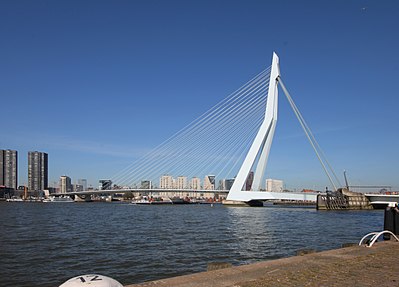
Rotterdam, NL
First semester 30 EC

Fundamental theoretical courses in research techniques and criminology.
Read more

First semester

30 EC

At EUR, the theoretical and methodological foundation will be laid in the first semester. This first semester starts in Rotterdam and provides you with foundational modules in international and global criminology and hands-on advanced research methods courses. You will engage with comparative and global criminology and gain insights into the core themes of the programme. Learning how to develop a ‘situated knowledge’ that takes the social, geopolitical and historical reality of a country as a starting point for criminological analyses and developing the tools to do this is the main aim of IMARC’s first semester.

Fundamental criminological courses - Erasmus University Rotterdam

Global developments have local consequences and vice versa, local developments also have wider consequences in a globalised world. Therefore, solutions can no longer be local but need to take the global dimension into account; in other words, they are ‘glocal’. The aim is to make students think critically and creatively about such processes of ‘glocalisation’ in relation to their research subject. Central themes are transnational migration in relation to super-diverse cities, neighbourhoods and communities, integration and radicalisation, external and internal border control, policing and anti-terrorism policies.

These criminological modules are offered:

  • Globalisation, Digitalisation and Crime: This course focuses on different themes in global criminology and the different positions that are taken in these fields.
  • Corporate & White-Collar Crime: understanding, explaining and governing corporate crime from a multidisciplinary perspective

Research technique courses - Erasmus University Rotterdam

The first semester has a focus at developing a strong research-oriented foundation.

  • Advanced Research Methods Module 1 : Introduction
  • Advanced Research Methods Module 2 : Qualitative data collection, analysis, and dissemination
  • Advanced Research Methods Module 3 : Statistical and Quantitative data collection

Good to know

The modules in the first semester are based on advanced research skills and we expect you to have prior knowledge of research techniques before the start of the programme, both qualitative and quantitative. You are familiar with SPSS, Atlas ti, you can perform statistical analysis and developing a research design.

University of your track
Second semester 30 EC

Specialisation track at one of the four universities.

Read more

Second semester

30 EC

In the second semester, you choose a specialisation track at one of the universities:

Global Criminology: Borders, Terrorism & Organised Crime - Erasmus University Rotterdam

The track provides insight into the phenomena of organised crime, terrorism, extremism, and their control. The phenomena and their manifestations are discussed in their diversity such as the history and explanations for organised crime, terrorism and radicalization, as well as recent developments concerning conspiracy thinking and the cyber dimension. The courses will deepen your knowledge and understanding of the core themes of IMARC’s EUR-track as they will help you to get an overview of contemporary issues concerning organised crime, terrorism, urban issues, (irregular) migration and control strategies. In this semester we offer also a hands-on module Doing research in IMARC’ with different activities to help you write your research proposal.

These modules are offered:

  • Cross-border Organised Crime
  • Terrorism, Extremism and Control
  • Urban issues, culture and crime
  • Doing Research in IMARC
  • One elective from Erasmus School of Law  (ESL) or International Institute of Social Studies (ISS)

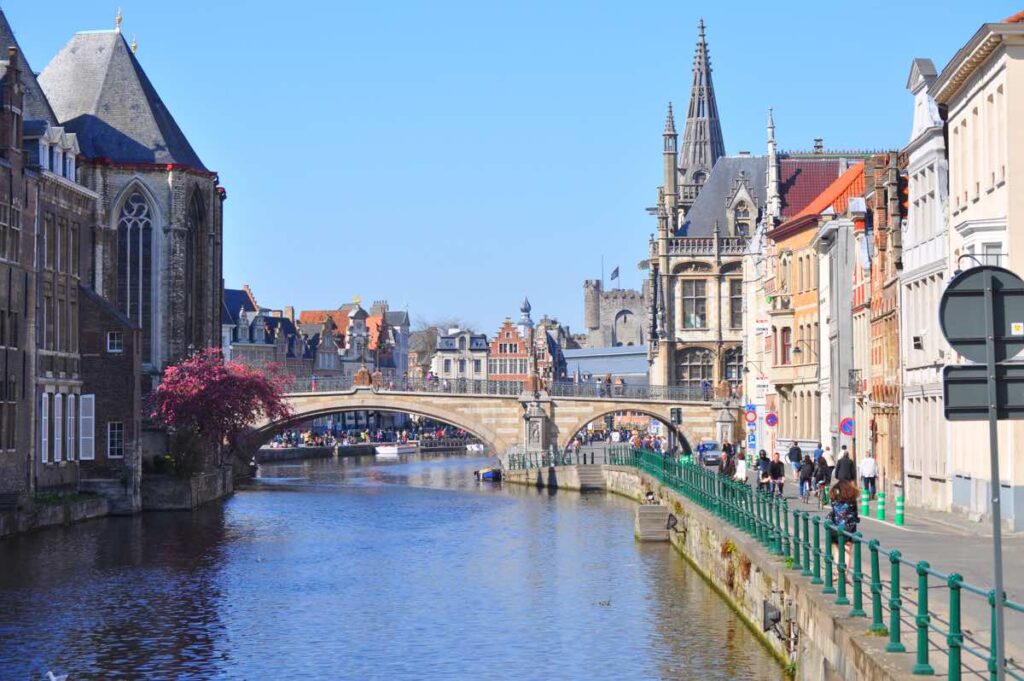
Advanced Research in Crime and Security - Ghent University

This track is designed for students who wish to develop advanced research expertise in crime and security and who are interested in preparing for doctoral-level research in criminology. It offers a strongly research-oriented curriculum that combines substantive engagement with contemporary issues in crime, security, criminal justice and conflict with systematic training in the design of innovative empirical research. Students are therefore expected to have, and further develop, a solid technical and methodological background, including familiarity with empirical research design and quantitative and qualitative methods.

These modules are offered:

  • Doing Research in IMARC
  • Criminology of War
  • Critical Criminology and the Criminal Justice System
  • Research Clinic
  • Two electives from the list below:
    • Advanced European Criminal Policy
    • European and International Migration Law and Policy
    • Sexual Offending, Prostitution and Human Trafficking
    • Cybercrime, Technology and Surveillance
    • Diversity and Migration in Criminology
    • Drug Policy
    • Maximum one course from the UGent elective courses which is relevant for the IMARC program and is allocated a minimum of 5 credits

Border Criminology and Criminal Justice Policy - University of Málaga

This track focuses on criminal justice policy as a transversal perspective and on empirical criminology for an applied-to-reality approach. The aim is to make students learn an empirical approach to current and border issues in the European landscape such as migration, gender and crime issues, cybercrime, and organised crime. Taking into account that we are facing particularly sensitive issues from the point of view of human rights, special attention will be given to this approach. These following courses are offered:

  • International criminal judicial cooperation
  • Fundamental rights and criminal proceedings
  • Economic criminal law
  • Criminal policy on Intellectual and Industrial Property
  • Criminal policy on cultural diversity and immigration
  • Criminal policy models
  • Criminal legislative policy
  • Criminal law and gender
  • Criminal Law and Criminal Policy of Corruption

Conflict, Security and Social Justice - Middlesex University London

This track focuses on themes of conflict, security and social justice through a critical examination of contemporary global issues in the field of criminology. Courses aim to provide students with an in-depth understanding of criminological topics bridging crime and control, justice system responses and interventions, political violence and terrorism, race and social justice, drugs control, youth crime, cybercrime and cybercultures. These following courses are offered:

  • Criminal Justice, Courts and Prisons
  • ‘Terrorism and Violent Extremism’: Transformations and Responses
  • One elective from the list below:
    • Cyber Safety and Practice
    • Climate Justice
    • Drugs & Crime (Distance Learning-3 in person workshops)
    • AI, Ethics and Digital Society

Good to know

The track university is the university that will supervise your  research and thesis. Your final defence will be conducted under the local rules of this university.

Free to move
Third semester 30 EC

Doing your research: data gathering, fieldwork and optional internship
Read more

Third semester

30 EC

In this semester, students will continue their supervised research, for example through fieldwork or desk-based data collection. The added value of the IMARC programme is that students are able to do more extensive and elaborate research. Students may undertake their research abroad or in the country where they are attending the semester. Fieldwork or other empirical research in other countries is encouraged. Data collection can take place at network partners or other organisations. Intersnships are optional and not guaranteed. Students follow online modules at the university of registration. This can be the university of your track or one of the other universities. The offers in the 3rd semester are divided in a mandatory part, for all students the same, and an elective part, that differs between the four universities.

Mandatory modules - Distant learning

Students will follow a mandatory part on campus or online. This part is awarded with 10 ECTS, assessment is by the university where you follow the 3rd semester.

Common Study Sessions Preparation and Presentation

Students will be trained to present a paper in a standard academic conference format, answer questions and respond to discussion, as well as use appropriate audio-visual support in the presentation. Students will develop skills in relation to peer-to-peer learning. The paper presented will be based on student research work as part of their wider thesis project. Students will be encouraged to critically and systematically reflect on their own paper presentation practice. They will present their paper at one of the Common Sessions of the Common Study Programme in Critical Criminology and receive individual feedback on the quality of the presentation. This paper will give the experience of presenting to a diverse, multi-national audience.

The university where students are registered from the third semester will supervise the preparation and mark the presentation.

Key Ideas in Criminology: an IMARC public lecture

In rotation, the universities organise a public lecture. Students will prepare a question for the speaker, to be sent to the coordinator of the public lecture beforehand. Students must prepare with readings followed with a summary/reflection of the public lecture’s main points and arguments with the link to the presenter’s book, publication or research i.e. leading to a short paper that focusses on the core idea of the book/publication/research. The university where students register for the third semester will mark the papers.


Elective modules - Distant learning

Then students will follow electives for 20 ECTS at one of the 4 universities (on campus or online).

  • EUR offers choices in one or more research modules (papers) to prepare yourself for your final research, content courses on campus EUR and content and research courses at the International Institute of Social Studies (part of the EUR but campus in the Hague)
  • Ghent offers choices in a research internship at the university, different content courses online or on campus and academic grant writing course on campus in Ghent.
  • UMA offers three mandatory options: two papers based on guest lectures and a research internship at the university, all online or on campus.
  • MDX offers the choices in a mandatory research clinic with 5 workshops, mandatory written preparation for your thesis and optional workshops (all online or on campus) or classes (on campus MDX).

Fieldwork and data collection - On site

The added value of the IMARC programme is that you are able to do longer and more elaborate research. You may undertake your research abroad or in the country where you are attending the semester and you can choose among IMARC’s network partners or propose other (new) network partners for your research. Data collection for your research can be performed at a partner university, an associate partner or during an internship.

Internship is always connected to your research purposes and in consultation with your supervisor (thus track university).

Good to know

In case you are doing your fieldwork at another location  than one of the universities, you will stay connected to the university that delivers the research modules for 30 ECTS.

Although the modules are offered online, you could opt to stay at the university (and city) that delivers the research modules.

If you follow the EUR track, moving to another university is mandatory under the mobility rules :two universities outside your country of residence during the programme.

University of your track
Fourth semester 30 EC

Analysing findings, writing your thesis and have your defence

Read more

Fourth semester

30 EC

In the fourth semester you will write your master’s thesis.

On site - The university of your track

The fourth semester is completely devoted to writing your master’s thesis and is the final part of the programme. The master’s thesis is a central and required part of the IMARC programme.

Collection of research data, analyse the findings, and write the master’s thesis  under supervision of your supervisor that is connected to your track (in the second semester) and the co supervisor, connected to one of the other universities . When your draft thesis is approved, you will present your work at an oral presentation for the final assessment and graduation.

Good to know

Deadlines for submitting your thesis and your defence can differ per university.

Career perspectives

What do you want to become?

IMARC isn’t just an academic programme – it’s training for your professional career. Would you like to be a policy maker at the EU? Or do you prefer to do academic research on border security? Maybe become a policy maker at an NGO or an human rights organisation. With a valuable multiple IMARC degree you will have numerous options to build a great career. As an interdisciplinary expert and a skilful researcher, you will contribute to answers to the current social and political challenges of crimes and crime control.