Study programme
Study programme
IMARC is a joint programme of four European universities: Erasmus University Rotterdam, Ghent University , University of Málaga and Middlesex University London. At EUR, the theoretical and methodological foundation will be laid in the first semester. In the second semester, you choose a thematic track at one of the universities. The third and fourth semester (year 2) are devoted to doing research in the IMARC themes of border crossing, security and social justice.
Why study IMARC
Global challenges
Increasing flows of people, goods and information are one of the major challenges of the 21st century. Great migrations often come with problems of crime and injustice, like radicalisation, human trafficking and violations of human rights. For decades Europe has reacted in a defensive way. Nowadays we realize the need for new visions and joint international responses. Understanding crime and crime control, and finding a balance between demands for security and social justice will be the start of possible solutions.
IMARC is an interdisciplinary full-time programme that prepares you for the current demands in the field of border crossing, security and social justice. IMARC addresses these issues from a European and global perspective. You learn to reflect and respond to new developments and current discussions in criminology, engage in research in the field of borders, security and social justice.
The research-oriented programme is aimed at motivated and talented master students who want to further develop their research skills and learn to address these challenges with scientific research and to look at data and research objectively. This will help you in deciding whether you want to pursue a career in the academic world or will improve your opportunities on the labour market outside academia.
As an IMARC student
You develop fresh and critical views on the essential criminological issues. IMARC brings together learning, research and practice through collaboration with partners such as governments, NGO’s, corporate actors and other universities.
You are trained in a variety of research approaches and methodologies. will gain new international experience with fellow international students, international orientation, addressing international criminological themes. You participate in international conferences and intercultural and interdisciplinary exchange. As a graduate you will have a lot of expertise in the field of border crossing, security and social justice.
Through program mobility, organising social events and reflective meetings about differences in learning methods, you develop cultural sensitivity to ethics, cross-cultural differences and integrity. You’ll learn transversal skills such as creativity, entrepreneurship, problem-solving attitude, reflective thinking and perseverance.
And, upon successful completion of the Joint Master’s Programme, you will be awarded with a double or multiple degree: the national degree of the university you spent at least one semester (30 ECTS)
Your future with IMARC
What is your ambition? Would you like to be a policy maker at the EU? Or do you prefer to do academic research on border security? Maybe become a policy maker at an NGO or an human rights organisation. With a valuable multiple IMARC degree you will have numerous options to build a great career. As an interdisciplinary expert and a skilful researcher, you will contribute to answers to the current social and political challenges of crimes and crime control.
With IMARC you will become a specialist in understanding crime and crime control, and finding a balance between demands for security and social justice.
4 semesters IMARC
Semesters
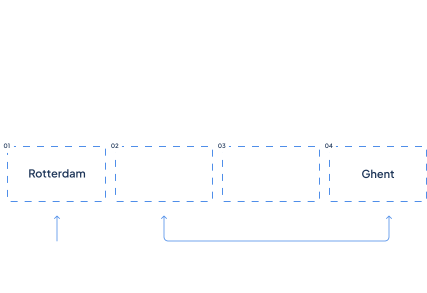
The semesters of the IMARC programme
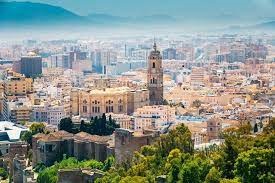
IMARC is a joint programme of four European universities: Erasmus University Rotterdam, Ghent University, University of Málaga and Middlesex University London. The programme is designed to respond critically, scientifically and in a policy-oriented manner to social questions that have dramatically changed the agendas of crime, harm and control.
In IMARC mobility is key. You will move between universities. In addition, during one of the semesters you will also join the Common Study Pogramme (CSP). Read more about the CSP here.

Career perspectives
Access to the field
The specialists who leave the program know how to approach international issues and research questions from different perspectives. They can work in a variety of sectors at different levels in analytical roles, policy making roles, research roles or PhD positions. The geopolitical changes show that there are more and more organisations involved in combating or preventing migration, security, crime and social justice. Potential employers are inter- or non-governmental organisations; national and European public services; consultancy firms, research and knowledge institutions/academic institutions, banks and insurance companies and consultancy firms.
Postgraduates
Skills such as creativity, entrepreneurship, problem solving attitude, reflective thinking, perseverance and self-discipline are all part of the training of our programme. Likewise, skills pertaining leadership, communication, initiative and cooperation are also included in IMARC learning outline. International orientation and multiculturalism contribute to the enhancement of employability and to the improvement of career prospects for our students as they focus upon the competences and skills of master graduates to analyse and use complex data in diverse roles – such as policy advisor or project manager in innovative policies.
IMARC alumni have numerous options to build a career as interdisciplinary experts and skilful researchers where they will contribute to answer to the current social and political challenges of crimes and crime control. The international orientation – specifically knowledge of different systems, cultural environments and societies – and multicultural outlook, makes our students attractive to employers working in the field of border crossing, international law and policies.
Current stats show that IMARC alumni work in an international, cross-cultural setting. Close cooperation between employers and students along their learning path enabled them to enter the labour market well-prepared and informed. Our alumni are provided with the skills and the knowledge and start their careers being already endowed with an international professional network.
Intended learning outcomes
Knowledge and understanding
- Independently describing, analysing, evaluating and critically reflecting on legal, social and historical aspects of criminological problems in their national and international contexts.
- Comparing and connecting, both nationally and internationally, basic disciplines of criminology: sociology, law, political science and international relations.
- Having knowledge on current discussions and issues regarding crime and deviance phenomena.
Applying knowledge and understanding
- Independently analysing, critically evaluating and writing academic texts in the field of criminology and applying paradigms while indicating and creatively using their boundaries.
- Independently applying knowledge about agents, policy processes and decision-making processes within the criminological field in addressing crime and deviance phenomena.
- Independently comparing and evaluating interdisciplinary problems in the field of criminology, specifically in relation to security, migration and global issues, in their historical, national, European and international contexts.
- Independently designing and carrying out empirical academic research, specifically in an international or interdisciplinary setting.
- Independently and within a certain timeframe formulating solutions and policies for new and complex criminological problems, both nationally and internationally.
- Ability to collaborate with relevant academic and non-academic parties in formulating solutions for interdisciplinary criminological questions.
- Independently working within relevant sectors and with relevant actors, among which academic institutions, governmental bodies, security actors, NGO and commercial organisations.
- Ability to act as a broker to connect sectors with each other.
Making judgements
- Independently constructing a critical vision of the societal role and responsibility of a criminologist, both nationally and internationally.
- Ability to integrate in research and policy advice aspects of developments in history and insights from related disciplines such as sociology, anthropology, international relations, political science, public administration, cultural studies, and law.
- Ability to reflect on ethical, theoretical and methodological choices in designing and carrying out research.
- Independently including ethical and normative perspectives in the evaluation and interpretation of research-outcomes, policy and practice.
- Respecting the integrity and deontological norms of the profession and integrating them in one’s scientific/professional work.
- Respecting cultural differences and integrating diversity, pluralism and tolerance in one’s scientific/professional work.
Communications
- Independently presenting criminological research, solutions and policy recommendations in English to specialist and non-specialist audiences, both in writing and orally.
Lifelong learning skills
- Independently engaging in research and being open minded to reflect and respond to new developments and current discussions in criminology and the work field of borders, security and social justice.
Testimonials
What our students say
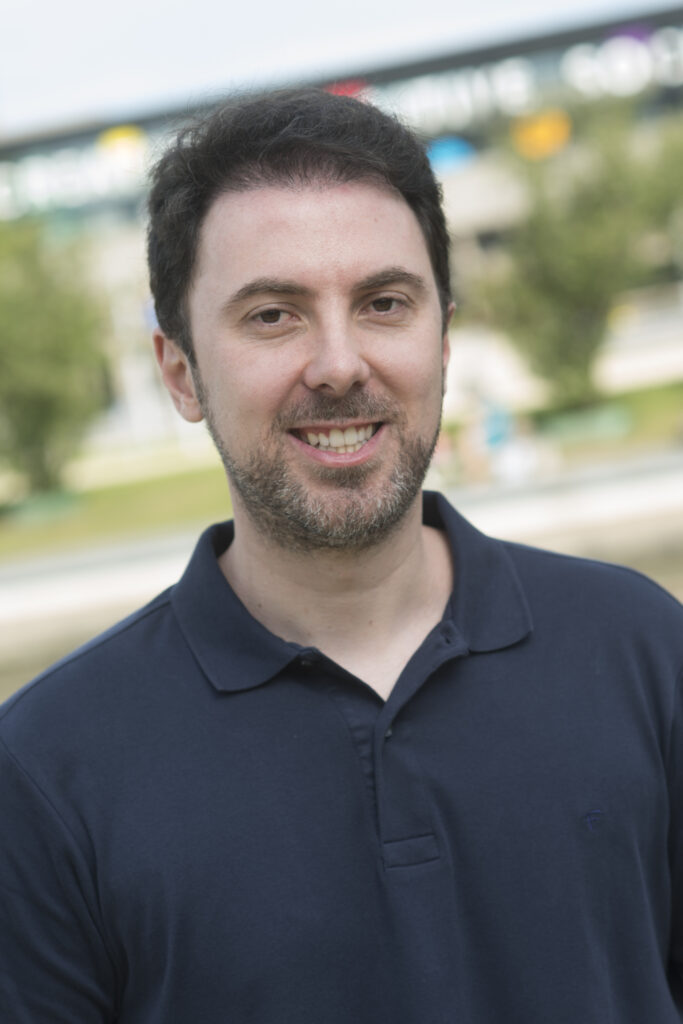
"The core of the program is globalization. It is a unique opportunity to learn criminological research techniques within a globalized context. The program offers many opportunities to develop new skills, communicate, and expand your scientific knowledge. Over the course, I could learn a lot from highly skilled professors. The program provides a close experience with them, and it is a unique opportunity to learn closely with professionals with deep research experience. For those who wish to take the journey, be prepared to learn, to study, to communicate, and to leave your comfort zone, but bear in mind one thing: in the end, the view of the mountain is amazing!"
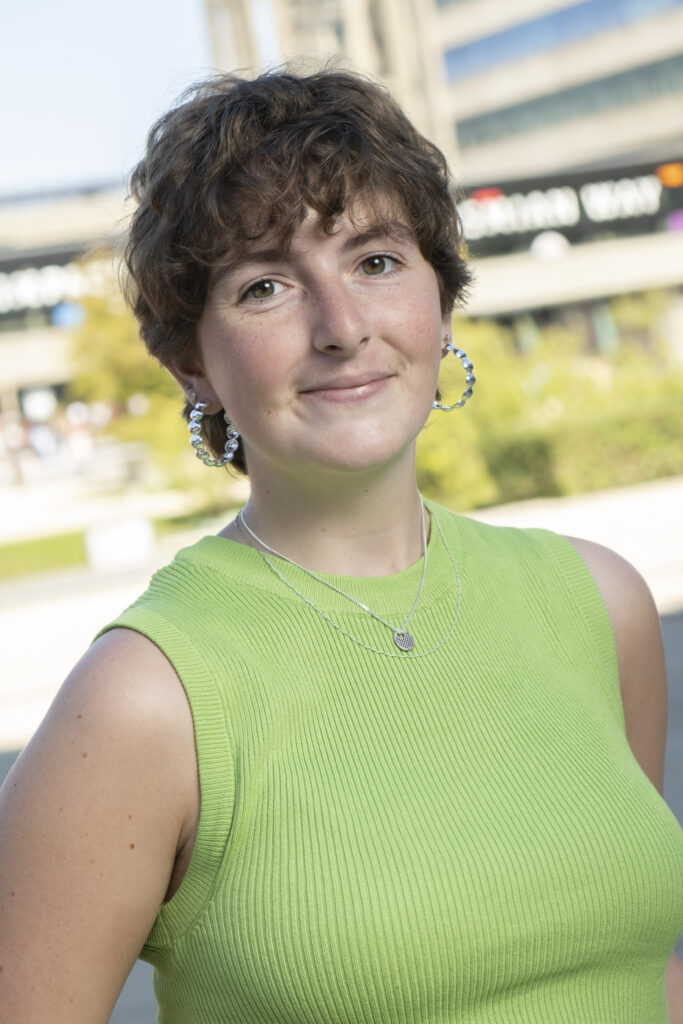
"IMARC has been a fantastic opportunity to study with peers from different academic and cultural backgrounds, learning and growing together. Through the programme we had the chance to explore European institutions, network with other students at the common study sessions and engage with critical criminology in a meaningful and interactive way. The opportunity to travel while researching was a real highlight of these two years. A truly invaluable experience!"
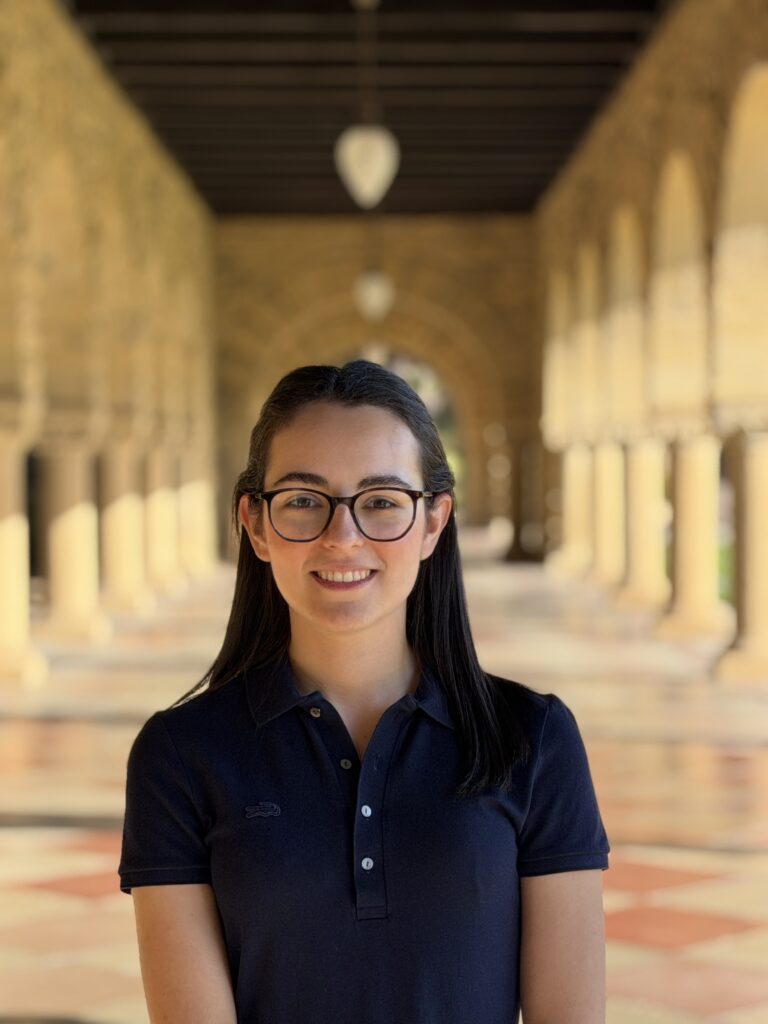
"IMARC taught me that predicting crime is not the same as understanding it. That distinction became my thesis, and it still guides my work, from bank fraud desks to Stanford. I came to IMARC after a criminology degree at the University of Bristol, curious about a question that felt slightly out of place in a traditional criminology programme. Can crime be forecast, and if it can, what exactly is a forecast telling us? Over two years, in Rotterdam and Ghent, that question became my master's thesis. Rotterdam gave me the technical foundation. I worked in Python and R with ensemble models such as Random Forest and XGBoost, and I learned to open them up with SHAP to see which variables drove a prediction. Ghent then pushed me to ask the harder question of what those predictions actually mean, and to read them against criminological theory and against the EU's regulatory frameworks for high-risk AI. My thesis looked at how well machine learning can forecast crime across Barcelona's districts. The models did well, especially for property crime, but when Covid-19 emptied the city, their predictions weakened. They had learned a particular version of Barcelona rather than something structural about it. That gap between what a model finds useful and what we can credibly explain is the most important thing I took from IMARC. It matters beyond academia too. A district can look 'high-risk' because it is genuinely more exposed or because it has historically been policed more heavily, and a prediction cannot tell those apart. Learning to see that distinction, and to say so clearly, is a skill I use constantly. IMARC was a formative experience and it opened doors for me. I am now a Research Assistant at Stanford University, and I doubt I would have got here without the mix of technical, legal and criminological training I received at IMARC "
Practical information
We offer
Frequently Asked Questions
When does the academic year start and end?
The induction event will be in the first week of September. The closing event and graduation follows in October or November of your last year.
Is a student obliged to study at more universities?
The IMARC programme is a joint programme with a multiple degree. All students will start at the EUR and will take courses at least for one semester at one of the other universities. Mobility between at least two universities outside your country of residence is mandatory in the programme.
If you follow the EUR track (second and fourth semester), your mobility to another university in the third semester is obliged. If the Netherland is the country of your residence, the track university should be in Ghent, Malaga or London.
Does the programme start on different moment in the year
Each cohort starts in September. There is no intermediate entry at another moment.
How do I show sufficient knowledge regarding qualitative and quantitative research methods?
IMARC is a master’s in advanced research and we expect you to have skills and experience with multivariate analyses in SPSS and NVivo or Atlas Ti. We require 15 ECTS as sufficient knowledge for both quantitative and qualitative methods. For this we use the average standard of our partner universities, being 1 ECTS for approximately 25 study hours.
How do I proof my skills on research techniques?
For your qualitative and quantitative skills, please pay attention to criteria such as experience with research designs, (quasi) experimental designs, unstructured and semi-structured techniques, interpreting and analyzing statistical analysis (descriptive statistics, inductive statistics).
We ask you to motivate how your courses of prior education cover the criteria on knowledge of research techniques. Make a distinction between qualitative and quantitative courses. Your application must be accompanied with a self-report on your research skills. More information on the criteria can be found on the Admission tab.
Can you give me advice to freshen up my research skills?
In IMARC we expect you to be familiar with SPSS (or similar statistic software) and NVivo or Atlas TI. You could check MOOC courses , e.g. https://www.coursera.org/specializations/social-science (Methods and Statistics in Social Sciences Specialization). This is free for read only. You’d have to pay in case you desire a certificate. Of course you are free to choose your own way of gaining better understanding of quantitative research. In either case, this will help you a lot in the IMARC programme.
To brush up your research skills. please find the links to the Erasmus Graduate School here:
- https://www.egsh.eur.nl/doctoral-education/phd-course-guide/brush-up-your-spss-skills/
- https://www.egsh.eur.nl/doctoral-education/phd-course-guide/brush-up-your-research-design/
All courses related to qualitative and quantitative methods and basic principles of research design will give you basic knowledge. Courses on qualitative data collection methods vary using unstructured or semi-structured techniques, ethnography and interview techniques. For quantitative methods, courses on interpreting and analyzing statistical analysis (correlation, regression) sampling and sample design with multivariate analyses in SPSS, or similar statistic software such as NVivo or Atlas TI, will provide basic knowledge.
For your qualitative and quantitative skills, please pay attention to criteria such as experience with research designs, (quasi) experimental designs, unstructured and semi-structured techniques, interpreting and analyzing statistical analysis (descriptive statistics, inductive statistics). Also, in IMARC we expect you to be familiar with SPSS (or similar statistic software) and Atlas TI. On https://atlasti.com/video-tutorials/ you can find all kinds of video tutorials. Also https://www.spss-tutorials.com/spss-two-way-anova-interaction-significant/ offers tutorials. Please check our self-report document for requirements: https://www.internationalmastercriminology.eu/wp-content/uploads/2019/11/Application_-Skills-research-methods-1.docx
How do I show sufficient knowledge regarding the deviance and social control requirements?
In IMARC we expect you to be familiar with criminological knowledge,
In your motivation we ask you to elaborate on how the courses in your previous education meet the criteria on deviance and social control.
Which literature is helpful to meet the requirements regarding social justice, deviance and control?
If you feel your knowledge is not sufficient yet, you could always consider to take courses on criminological knowledge. All courses related to transnational crime, migration, border crossing, social justice and security are very interesting to attend. For your general criminological knowledge it is always wise to read the book of Carrabine (Criminology: A Sociological Introduction, 2014). Also, we can recommend you to read a comprehensive overview written by Tim Newburn (Criminology, 2013) which provides an introduction to the fundamental themes, concepts, theories, methods and events that underpin the subject and form the basis for all undergraduate degree courses and modules in Criminology and Criminal Justice.
Why do I need a proof of my level in English?
Applicants must demonstrate the ability to listen, speak and write in the English language because all classes of the programme are taught in English. Supervision of master theses is also in English. We expect students to actively engage in the course and group assignments. Presentation of the thesis is assessed in English.
From whom am I supposed to get letters of recommendation?
Letters of recommendation could be from former lecturers who know you personally. Your thesis supervisor for instance, or other lecturers you’ve worked with. A short statement of ½ – 1 page will be sufficient. Your (former) employer(s) could also be a good option. Just someone who knows you on a personal bases and can tell something about you.
You do not need to use a format for your reference letter. If desired, the person who writes your letter of reference may submit the letter directly to the IMARC office (imarc@law.eur.nl), with the name of the applicant in the title.
I cannot provide the requested reference letters yet. Can I still start the application procedure?
You may start your application without letters of reference. We will start the selection procedure under the condition you will provide us with the requested documents at a later stadium. Send us your application using this email address (imarc@law.eur.nl). Application via the website is not possible without these documents.
Please indicate with your application the estimated date for the missing documents.
I am wondering if my grades are sufficient for this programme?
The final ranking is made on the basis of your academic credentials and academic performance, strength of the motivation letter, affinity of the previous studies with the objectives of the master’s programme, knowledge of questions of deviance and social control and sufficient knowledge of both qualitative and quantitative research methods.
For EMJM scholarships we evaluate on the basis of merit. Only the most excellent students are selected for EMJM funding. The grades will be part of this evaluation, but also motivation, educational background and work experience are taken into account.
I graduated from high school with an IB diploma, do I need a proof of my level in English?
You are exempted from proof of English proficiency, if your previous education (min. 2 years) is completed in one of the following native speaking countries and nationality from one of these 6 countries: Australia, Canada (except Quebec), Ireland, New Zealand, UK, USA. More information in the Admission tab
The decision of the selection committee was negative. Can I appeal?
You can appeal to this decision with writing a statement within 15 days after the informed decision. As mentioned on our website: Students are only eligible to enter the selection process if they hold one of the following degrees:
- Degree in Criminology: Preference will be given to students with a background in Criminology
- Other degrees: Applicants with other degrees than Criminology, in one of the other Social Sciences or Humanities or Law are eligible on the condition that the holder a) can demonstrate knowledge of questions of deviance and social control, and b) can demonstrate sufficient knowledge of both qualitative and quantitative research methods.
In your appeal you must motivate that your Bachelor of Science degree is one of the above/ Additionally, make sure you motivate and explain in more detail your knowledge in criminology and research techniques and how you think this fulfills the minimal requirements of our programme. Especially your lack of research techniques makes you not eligible for IMARC. Check the website for our minimal requirements before you appeal.
You can send your motivation and additional documents to imarc@law.eur.nl.
I am currently in my last year and don't have my bacholor's degree yet, I was wondering if I still can apply?
You can send your diplomas at a later stage. In case you are admitted to the master, your final graduation and diploma is subject to enrolment.
I would like to do some courses of the IMARC programme. Is it possible to join individual courses in semester 1 or 2?
In semester two, some courses offered by EUR are open for non-IMARC students. When you are a Erasmus University student, you may be eligible. The courses have limited availability and IMARC students have priority. Moreover, background knowledge may apply per course. Please check with the IMARC coordinator.
Can I have a side job during the programme?
IMARC is a full time programme and appeals to a full study schedule. We discourage side jobs but fully understand if you need it for financial aid.
Does the IMARC programme offer housing?
Student housing is not arranged for you by IMARC; it is your own responsibility. We can imagine that this can be a struggle for some of you. You are encouraged to arrange housing directly after a succesful application. To help you get started in the first semester, we organized a webinar on the Rotterdam Housing Market that you can review online. If you have not arranged residence yet, we strongly advise you to start looking for accommodation as soon as possible to avoid stress and disappointment.
What are living costs, and what other costs do I have to consider as a non-EEA student?
Non-EEA students must be able to provide documented proof that they have sufficient financial means to cover:
The immigration fee (2026): € 254,=
Living fee 2025 (financial means): € 1.115,= euro’s per month. So for a year this comes down to € 13.380,=. This amount will be adjusted for 2026 but has not been announced yet.
You pay the living fee at the start of the enrolment process. You can reclaim your living costs as soon as you have arrived in the Netherlands. The amount will be reimbursed to you in one batch after your reclaim. The immigration invoice will be Tuition fee + € 254 + € 13.380 euros (to be updated) for non-EEA students. Students who stay longer than 12 months receive an annual income statement form that they have to sign.
The immigration deadline is 15 June, students should not wait for Studielink to send them a message. It is best for them to just follow our instruction emails.
The municipality is giving fines to students who are not registered with the BRP. A postal address is not sufficient, in the case a student does not have a house address, they need to be made aware that they always should keep proof of the reason why they could not register. If it’s the housing crisis “fault” they should document the times they have been rejected for housing for example.